
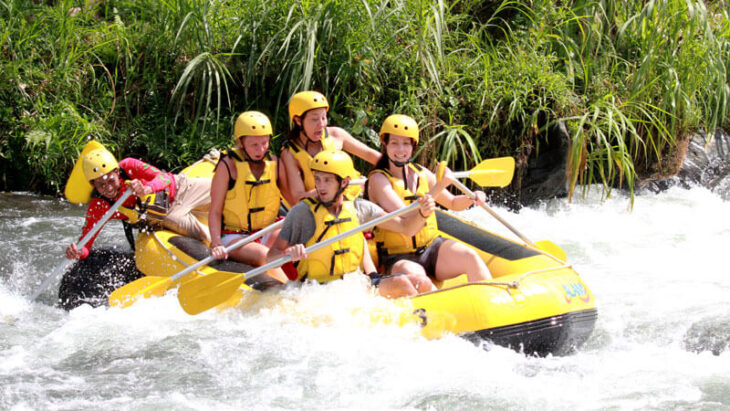
White water rafting is a competitive sport aimed at navigating downstream in a white water river using an inflatable raft. It is considered an extreme sport that is very challenging and risky, requiring a lot of teamwork.
White water rafting is also a highly popular recreational activity practiced in most countries around the world. Each participant will be provided with equipment including aids such as life jackets, swimsuits, helmets, and paddles.
Meanwhile, the guide will organize the raft, bring throw ropes, communication tools, whistles, river knives, life jackets, first aid kits, and large guide paddles for extra leverage.
But, did you know that white water rafting has many benefits, especially for your health? Let’s explore further how white water rafting offers more than just excitement. It is an activity that combines fun with health benefits!
Health Benefits of White Water Rafting

Here are some health benefits of white water rafting:
1. Helps Burn Body Calories
Are you on a diet to lose weight? Try white water rafting occasionally when you are bored with your diet program. In the movements of white water rafting, the body is required to perform various types of movements.
Paddling is necessary when the boat is in a steady water flow, while strong movements are needed to keep the boat stable in fast-flowing water. If the various movements in white water rafting are done continuously, the body’s metabolism for burning calories will increase, which helps with your diet program.
2. Cleans the Lungs
The natural environment as a place for white water rafting is usually still very pristine, as it is still crossed by strong river currents. If you are used to inhaling urban air with high pollution, your lungs might not be very clean.
As stated by Ubudayungriverrafting.com, inhaling fresh air in white water rafting sports areas like rivers surrounded by hills, mountains, rice fields, and cliffs will allow your lungs to breathe clean air. White water rafting will help stabilize your body’s health, even for internal organs like the lungs.
3. Strengthens Heart Muscles
White water rafting requires extra energy. Various movements, such as paddling, will strengthen arm and chest muscles. However, in the activity of white water rafting, there is usually a sense of fear and worry. This feeling will make the heart work faster.
For those who are afraid, their heart rate will increase. The strength of the body muscles will channel oxygen to the blood vessels, and the heart will pump faster. This is what makes white water rafting very good for training the strength of the heart muscles.
See also : Improving Posture and Flexibility with Yoga Poses
4. Trains Body Muscle Strength
White water rafting participants seem to just sit in the boat and move according to the waves of the water moving the boat. However, this is not all there is to it because white water rafting trains the body.
When the boat moves, the body must balance to avoid falling. Also, when the water doesn’t move the boat much, the boat must be moved by the paddling power of all the participants in the boat.
5. An Excellent Cardio Workout
As a strenuous activity that requires endurance, you must paddle for a long time in fast-flowing currents to ensure proper navigation and prevent the raft from capsizing, which could send everyone into the river. The stamina and endurance you need must be at a peak level to ensure you successfully complete the challenge.
Safety Tips for White Water Rafting
Many people view white water rafting as a dangerous sport. Overall, white water rafting doesn’t always pose potential dangers if conducted according to procedures. Therefore, always pay attention to safety while rafting.
Here are some safety tips for white water rafting:
Wear Comfortable Clothing
The clothes worn during rafting should suit the needs. Don’t wear high-heeled sandals or sneakers that can absorb a lot of water. Comfortable clothing is better than prioritizing style.
Wear a Life Jacket
White water rafting can be dangerous if done at certain high water levels and difficult track conditions. There’s always the potential for you to be thrown into the water. Even if you can swim, it doesn’t guarantee safety. Wearing a life jacket will help if you are thrown into the water. Life jackets are useful in strong currents.
Attend the Briefing
A briefing process will usually be introduced to all rafting participants. Never underestimate any instructions given by the rafting leader or committee. Important instructions usually relate to:
- Paddling techniques
- Techniques to stay in the boat
- Techniques to handle strong currents
- How to save yourself if you fall into the water
Follow all directions so that if something unexpected happens, you know how to handle it.
Use Protective Equipment
Protective gear is essential when rafting. Wear a helmet to protect your head, and gloves if needed. Safety equipment will usually be introduced by the rafting instructor.
Master Swimming Techniques
White water rafting doesn’t require special swimming skills because swimming in river currents is very difficult. To prevent accidents, everyone who wants to raft should master swimming techniques. Swimming not only promotes health but also ensures safety in certain conditions.
Follow the Leader While Rafting
In one boat used for rafting, there is usually a leader. The leader gives commands to all participants. During rafting, it’s best to always obey the leader’s instructions and avoid actions that could endanger all participants.
